Specifics of Servicing and Tuning SCR Systems on Volvo Penta Industrial Engines (Generators, Pumps)
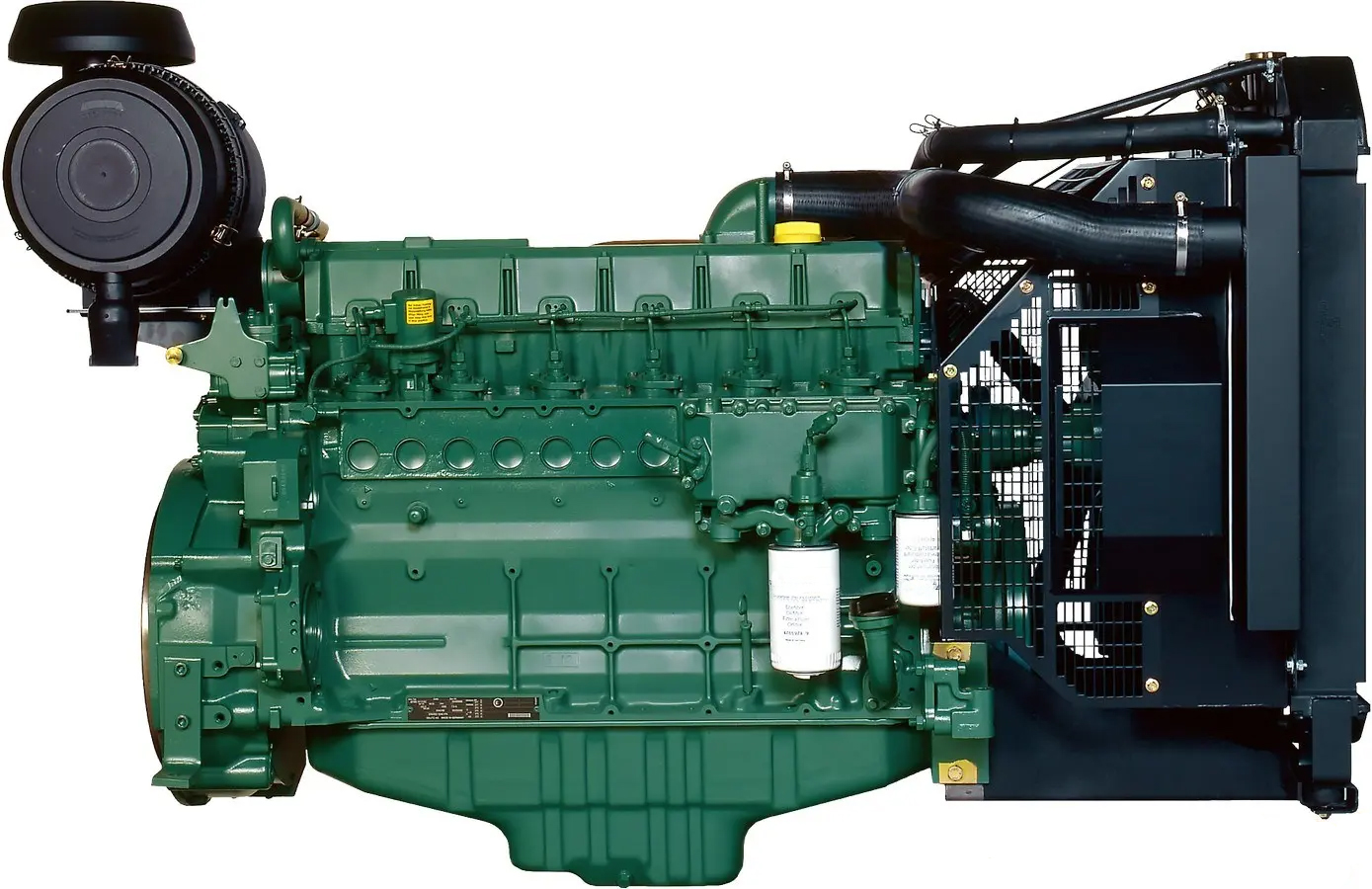
Volvo Penta engines used in generator sets and pumping stations are built to conform to stringent off-road diesel emission regulations EU Stage V / US Tier 4 Final. To comply with these standards, they are equipped with an SCR (Selective Catalytic Reduction) system.
In real-world operation, however, SCR often becomes one of the most vulnerable and costly systems—especially during long-term stationary use. As a result, more and more equipment owners are choosing SCR tuning followed by disabling and physical removal as a more rational solution in terms of engine longevity and maintenance.
SCR on Stationary Installations: Where Problems Arise
Under generator and pump operating conditions, the SCR system behaves differently than on mobile equipment:
long continuous run cycles accelerate wear of dosing components;
constant engine speed promotes AdBlue crystallization in the injector;
seasonal downtime leads to DEF freezing and damage to supply lines;
sensitivity to AdBlue quality causes frequent faults and derate modes.
As a result, even a mechanically sound engine may lose power or shut down due to SCR-related issues that have nothing to do with the engine’s actual condition.
SCR Tuning: What It Involves
An expert tuning of SCR on Volvo Penta engines involves a structured process which can be divided into several phases:
ECU Software Adaptation
correct deactivation of SCR monitoring;
elimination of NOx-related faults and emergency derates;
stabilization of engine operating modes.
Physical Removal of SCR Components
removal of the SCR catalyst;
removal of the dosing module, injector, and AdBlue lines;
elimination of the DEF tank and associated sensors.
Important: SCR tuning should only be performed by experienced professionals.
Main SCR Components and How Maintenance Changes After Tuning
With standard operation, maintenance focuses on regular SCR inspections. After SCR removal, service becomes much easier as many of these tasks are reduced.
Component | Service Interval with SCR (reference) | After SCR Removal | Maintenance Benefits |
AdBlue® / DEF fluid | Refill as consumed | Fully removed | No reagent costs (€1,000–3,000/year savings), no crystallization risk |
AdBlue filter (pump module) | 2,000 h / 24 months | Removed | Most frequent replacement eliminated |
Pump module + doser | 6,000 h / inspection every 2,000 h | Removed | No leaks or cleaning, 10–20% less downtime |
NOx sensors (pre/post catalyst) | 6,000 h | Removed | No false faults, stable operation without derate |
SCR catalyst | 12,000–18,000 h | Removed | No poisoning or flushing, simplified exhaust |
Tank level/temperature sensor | Inspection every 1,000–2,000 h | Removed | No wiring issues or false signals |
Lines and heating | Inspection every 1,000 h | Removed or simplified | No winter freezing, fewer vibration failures |
Real Service Intervals: Before and After Tuning
SCR removal significantly extends effective service intervals by eliminating key “bottlenecks.” With quality fuel and proper load conditions:
Operating Mode | AdBlue Filter (before / after) | NOx Sensors (before / after) | Pump-Doser (before / after) | Catalyst (before / after) |
Backup diesel generator (200–400 h/year) | 24–36 months / eliminated | 5–7 years / eliminated | 7–10 years / eliminated | 12–18 years / eliminated |
Primary diesel generator (3,000+ h/year) | 18–24 months / eliminated | 5,000–7,000 h / eliminated | 6,000–9,000 h / eliminated | 14,000–20,000 h / eliminated |
Continuous-duty pumps (6,000+ h/year) | 12–18 months / eliminated | 4,000–6,000 h / eliminated | 5,000–8,000 h / eliminated | 12,000–16,000 h / eliminated |
After tuning, maintenance focus shifts to core engine service (oil, filters, turbocharger), increasing overall operational life by 15–25% due to reduced SCR-related failure risks.
Maintenance Benefits of SCR Removal
After proper SCR deactivation and removal, owners gain several practical advantages:
elimination of AdBlue purchase and storage costs;
no NOx or DEF sensor failures;
fewer emergency shutdowns;
simplified scheduled maintenance;
no seasonal DEF freezing issues.
For generators and pumps, this means more predictable and stable operation without dependence on emission-control components.
How SCR Tuning Extends Engine Life
SCR removal has a positive impact not only on maintenance but also on the overall durability of Volvo Penta engines:
reduced thermal load on the exhaust system;
stabilized exhaust backpressure;
engine operates in optimal modes without emission-driven limitations;
lower risk of emergency derates and sudden shutdowns under load.
In continuous-duty applications, this directly translates into longer engine life and extended service intervals for critical components.
Economic Efficiency for Industrial Applications
Over time, constant SCR repairs on stationary equipment become economically unjustified:
high cost of NOx sensors;
limited lifespan of SCR catalysts;
frequent equipment downtime.
SCR tuning and removal allow the Volvo Penta engine to be converted into a simpler and more reliable configuration, reducing total operating costs and improving overall equipment profitability.
Conclusion
Under demanding working environments, SCR removal and tuning becomes a common practice for pumps and generators powered by Volvo Penta industrial engines. This makes maintenance easier, lowers the chances of failures, and leads to a longer service life of the engine. The maintenance advantages are clear: fewer components, fewer repairs, and lower operating costs.
Proper SCR tuning is not a compromise, but a key for the dependable and sustainable functioning of industrial machinery.