Volvo Excavator DPF Delete: Is It Worth Removing the DPF from Your Excavator?
Are you a Volvo excavator owner dealing with problems with DPF regeneration? Then this article is for you. Getting a DPF delete has become a new tuning solution that promises avoiding regeneration problems while decreasing fuel usage. In this post, We will explain what DPF removal is, how it works on Volvo excavators, as well as the advantages, disadvantages, and risks you must evaluate.
What Is a DPF and Why Is It Installed on Volvo Excavators?
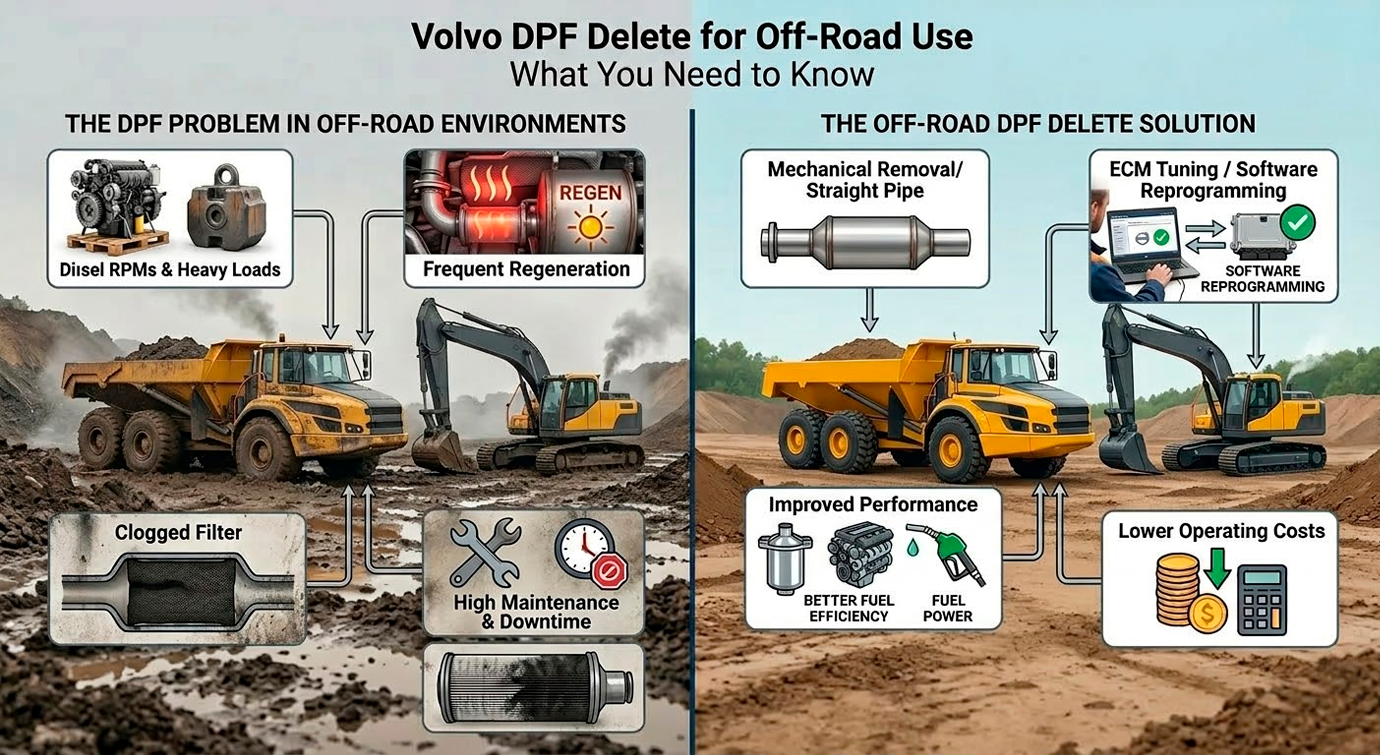
A Diesel Particulate Filter (DPF) is a key part of the exhaust aftertreatment system in diesel engines. Its function is to trap the soot and particulate matter from the exhaust gas. It cuts down the emissions that are detrimental to the environment.
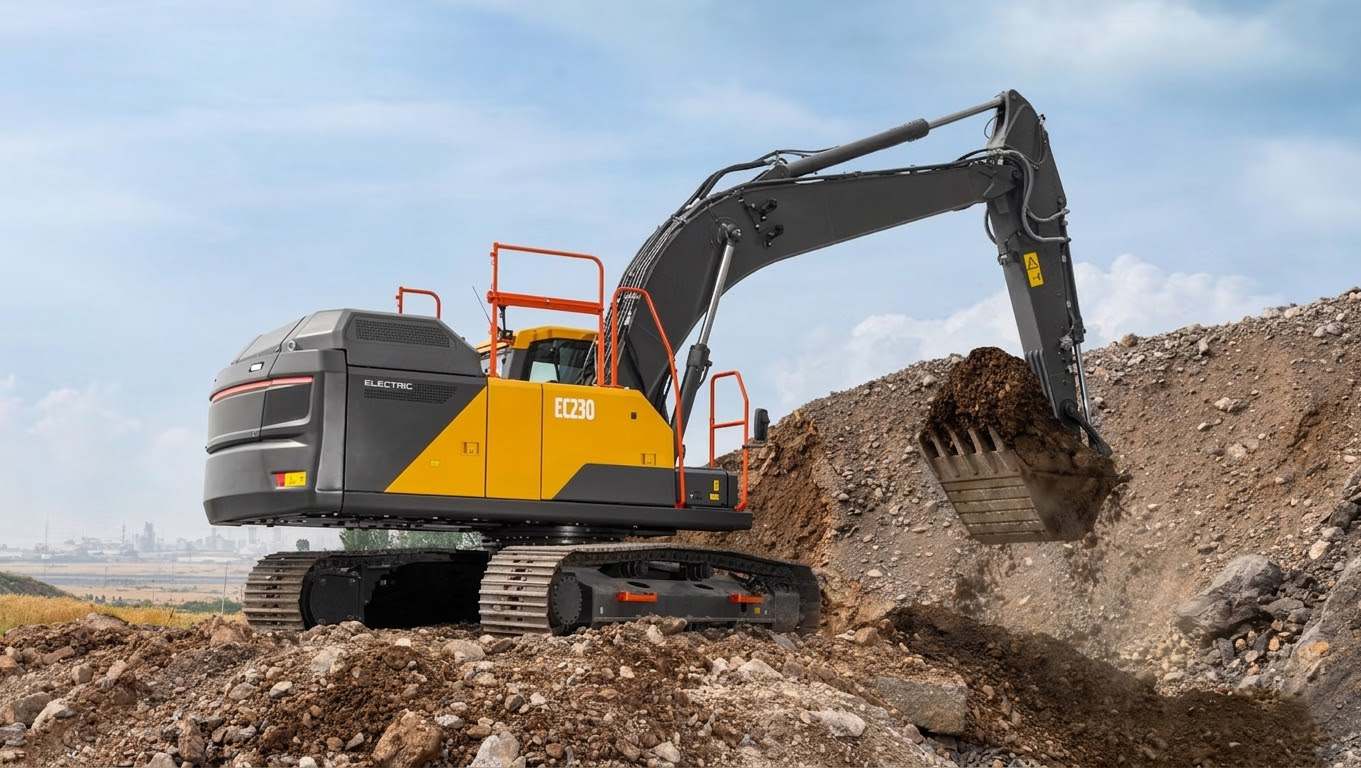
In Volvo excavators — such as the EC210, EC220, or EC300 models — the DPF works together with the EGR (Exhaust Gas Recirculation) and SCR (Selective Catalytic Reduction) systems. The filter collects soot and periodically burns it off in a high-temperature process called regeneration (up to 600°C).
Even though this system was made to satisfy emission limitations, issues tend to arise when the DPF, or associated equipment, begins to fail. Incomplete regenerations, increased fuel consumption, and persistent error codes might lead owners to consider completely removing the DPF.
What Is a DPF Delete and How Does It Work?
DPF delete means turning off the software system and taking out the diesel particulate filter. There are two main steps:
Software reprogramming: The ECU (Engine Control Unit) is reprogrammed so that it no longer detects or monitors the DPF system. This can be done remotely using apps like Mochester App (M4 App).
Physical removal: A straight pipe section is put in place of the DPF unit after removal from the exhaust system.
For Volvo excavators, professionals usually recommend a combined method — physical removal plus ECU tuning — to achieve the best performance results.
Benefits of Removing the DPF on a Volvo Excavator
Volvo excavator owners frequently cite the benefits of DPF deletes. These are the most often noted advantages:
More power and torque: Reducing exhaust backpressure can increase horsepower and torque by 10–20%. The machine “breathes” better and performs stronger under heavy loads.
Better fuel economy: Eliminating bought fuel regenerations makes fuel consumption reduction possible by 5–15%. That’s significant fuel savings for an excavator operating 20 hours a day.
Less downtime: A construction machine keeps running longer with no clogged filters or forced regens.
Lower maintenance costs: Components last longer. Servicing becomes simpler and cheaper.
Improved reliability in harsh conditions: On construction sites where Volvo excavators dig trenches or load dirt, a DPF delete can make the equipment more dependable and stable.
According to professional tuners, Volvo excavators show a 10–15% overall efficiency increase after DPF removal — with the modification typically paying for itself within 6–12 months.
Potential Risks to Consider
Even though removing the DPF offers obvious advantages in terms of performance and fewer maintenance issues, some disadvantages need to be considered:
Poor-quality work can cause damage. If the procedure is done incorrectly, it can harm the engine or electronic systems, leading to expensive repairs. Always use certified professionals.
Warranty loss. Any modification to the emissions system will void the manufacturer’s warranty. Authorized dealers may also refuse service if they detect a deleted DPF.
Legal issues. In some countries of the world, deletion of emissions equipment is illegal. Be sure to check local regulations before performing a DPF delete on your Volvo excavator.
Conclusion
Removing the DPF can be a true enhancement for your construction machinery since it provides increased power, decreased downtime, and reduced expenses during operation. If your Volvo excavator is out of warranty, operates in harsh conditions, and you’re aware of the legal implications, it’s definitely worth considering.
In the case of newer equipment or equipment working near eco-regulated boundary lines, the best approach may be to wait till the warranty is done or it may become viable to look into DPF/SCR Emulators.
Either way, this procedure requires a balanced approach and professional tuning to ensure your Volvo excavator performs at its best — safely, efficiently, and reliably.