Troubleshooting Volvo DPF Issues. When Should You Consider DPF Delete?
Common Volvo DPF problems, how to diagnose them, and when a professional DPF delete becomes a justified solution.
Volvo creates diesel-powered trucks, buses, and construction equpment meeting the emission requirements. The Diesel Particulate Filter (DPF) was designed to capture soot particles and mitigate pollution, and is one of the main components of their emission control systems.
Though DPF technology is good for the environment, it can become a costly headache for truck and heavy equipment owners. In this article, we will discuss the most common issues with the Volvo DPF, how to spot the DPF issues, and when it makes sense to look into DPF delete.
The Most Common DPF Issues on Volvo Trucks
1. Clogged filter
The DPF works during passive, active, or forced regeneration cycles; when trapped soot burns off at high temperatures. Filters may not regenerate correctly when trucks operate on short routes under heavier loads or when they are idling at low RPMs for extended periods. This leads to blockages, reduced power, and increased fuel consumption.
2. ECM errors and limp mode
When filters are limited, sensors capture increased exhaust pressure. This can cause warning lights to turn on, fault codes to ignite, and even force the engine to enter derate/limp mode, which makes the truck nearly impossible to use.
3. Frequent forced regenerations
When the DPF accumulates too much soot too fast, forced regeneration takes place. This consumes extra fuel, raises exhaust temperatures, and accelerates wear on engine components, increasing maintenance costs.
4. High maintenance cost
DPF Cleaning or its replacement is really expensive. Annually for high mileage trucks and heavy equipment, the service costs can run into thousands of dollars.
How to Diagnose DPF Problems
Look out for these signs:
Loss of power and reduced torque
Higher fuel consumption
Frequent exhaust system fault codes
Excessive exhaust system heat
Constant need for regenerations
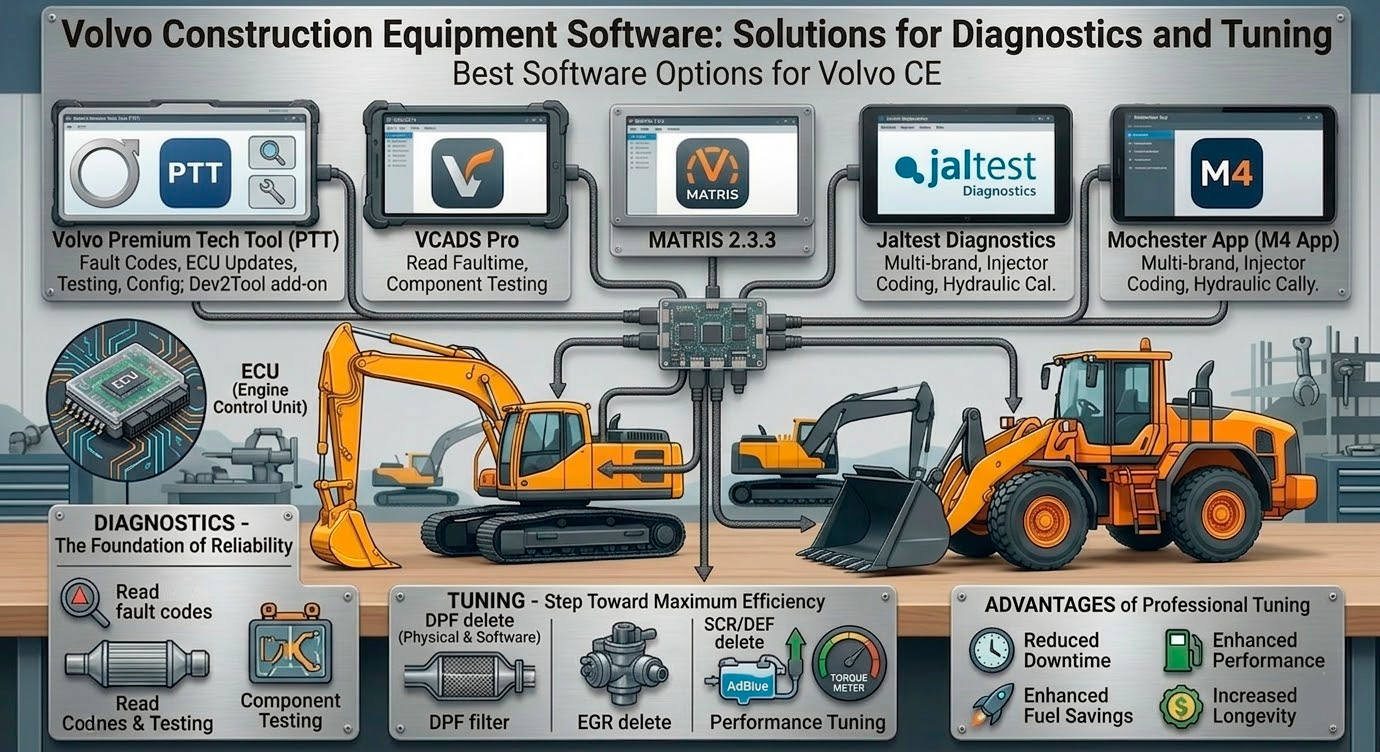
For accurate diagnostics, Volvo scanners or universal diagnostic tools can read ECM data and confirm DPF status.
When Should You Consider the DPF Delete?
Not every Volvo truck or construction equipment requires the DPF delete, but in some cases, this will be a justified solution:
Off-road Equipment Only – this includes mining trucks, construction machinery, or even some agricultural machinery that does not ever travel on a public road.
Chronic regeneration problems – when the filter fails to regenerate due to the type of work performed
Excessive repair costs – ongoing DPF cleaning and replacement becomes uneconomical
Need for reliability – in harsh working conditions where downtime is critical
How a Volvo DPF Delete Works
The process includes two steps:
Mechanical – the filter is physically removed and replaced with a pipe, insert, or dummy filter.
Software - that involves the ECM reprogramming to disregard DPF monitoring and to ignore the generation of DPF-related error codes.
There are two main approaches:
DPF emulator - imitates the operations of the filter.
ECM tuning – modifies the engine control module to completely take out the DPF functions.
Important Considerations Before Removing a DPF
Legal restrictions – It is illegal to DPF delete vehicles on public roads. Non-compliance brings fines and penalties.
ECM risks – Inadequate tuning risks injuring the engine and the electronic systems.
Warranty issues – manufacturers may deny warranty coverage after exhaust system modifications.
Conclusion
The DPF is an essential part of Volvo’s emissions system, but it’s also one of the most frequent causes of downtime and high repair bills. Clogging, ECM errors, forced regenerations, and expensive maintenance are common complaints for operators working in tough conditions.
For vehicles like Volvo trucks and off-road equipment that don’t run on public roads, if you have recurring problems with your DPF, you might want to consider a professional DPF delete. Just make sure the job is done by experts who can handle both the mechanical removal and ECM reprogramming safely.
When done the right way, a DPF delete can reduce costs, enhance dependability, and sustain your Volvo’s strong performance in challenging conditions.