Volvo DPF Delete for Off-Road Use: What You Need to Know
Volvo trucks and construction equipment have DPF systems integrated for emissions compliance. However, in off-road applications, these systems lead to frequent clogging, downtime, and increased cost of ownership. This article will describe the function of the DPF, the reasons for its problematic operation in low-RPM, and high-load conditions, and the advantages of a DPF delete. Furthermore, it will describe the process including the DPF removal, ECM tuning, and will address the major risks and the legal aspects for off-road equipment owners.
Volvo uses advanced technology in their emissions control systems on their diesel trucks and construction equipment, specifically in their Diesel Particulate Filters (DPF). This technology helps cut down harmful exhaust particles, ensuring environmental standards are met and minimizing ecological damage. However, operators who run their equipment off-road or on closed job sites often consider removing the DPF. Why does this topic raise so many questions? This article will cover the DPF, how it functions, its significance, and what to consider if you want to perform a DPF delete.
What Is a DPF and Why Does It Matter?
A diesel particulate filter stores diesel combustion soot in its porous structure. Over time, the filter fills up, and a regeneration process is triggered — burning off the buildup at very high temperatures.
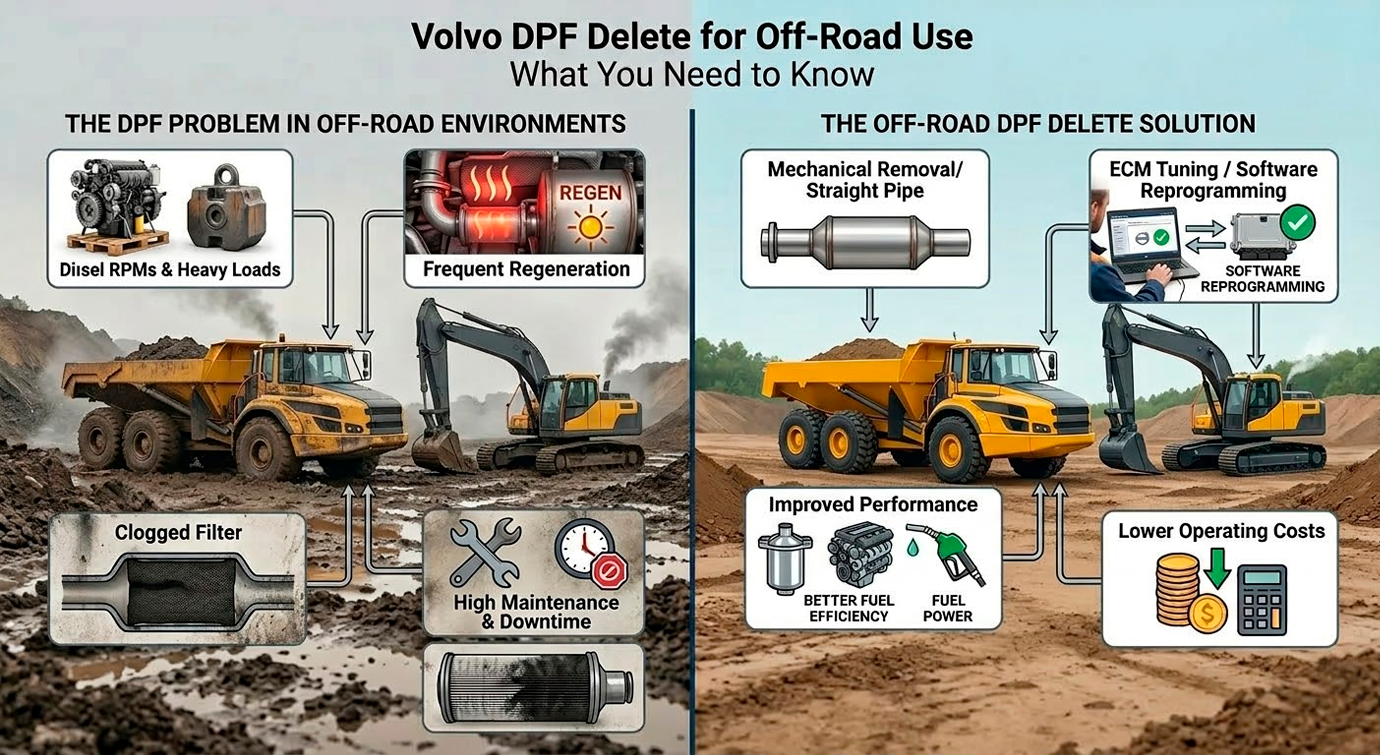
On highway trucks, regeneration usually works as intended. But in off-road environments like mining, construction, or agriculture, the DPF often becomes a problem. When a machine operates on low RPM's for extended periods of time under heavy loads, it affects the system duty cycle irregularly, this quickly clogs the machine filter, which in turn escalates maintenance costs and machine downtime.
Why Choose a DPF Delete for Off-Road Volvo Equipment?
For off-road heavy equipment like Volvo trucks, removing the DPF gives some obvious advantages:
Lower operating costs – eliminates the need for frequent regenerations, cleanings, or expensive filter replacements.
Improved reliability – reduces the risk of derate mode or limp mode caused by a clogged filter.
Improved throttle response and power - with no DPF restrictions, the engine is able to perform better and more efficiently in higher stress situations.
Better fuel efficiency – regeneration consumes extra fuel, which is no longer required after a DPF delete.
How Is a Volvo DPF Delete Performed?
The process includes the following steps:
Mechanical removal - it involves the use of physical filters to delete or replace elements with "fakes" or straight pipes.
Software reprogramming - tuning the Engine Control Module (ECM) so it no longer registers DPF errors.
There are two methods to use:
DPF emulators – electronic devices that mimic the signals of a working filter.
ECM tuning – customizing software that fully turns off the DPF system.
Things to Consider
While a DPF delete can bring big advantages for off-road equipment, there are also risks to be aware of:
Poor ECM tuning may cause engine issues.
Unqualified service can damage sensitive electronics.
If you return the truck to public roads, the DPF system must be restored to stay compliant.
This is why it's important to collaborate exclusively with specialists in Volvo DPF deletes to gain experience in the particular engine types: D11, D13, and D16.
Conclusion
The DPF Delete helps to lower costs while increasing DPF reliability and improving DPF engine performance. At the same time, it’s important to respect legal restrictions and trust the procedure only to experts.
For Volvo equipment operating in harsh off-road conditions, removing the DPF may be the most practical solution to keep your machinery running at its best.