Complete Removal of the DEF (AdBlue) System on Volvo: Pros, Cons, and Technical Nuances
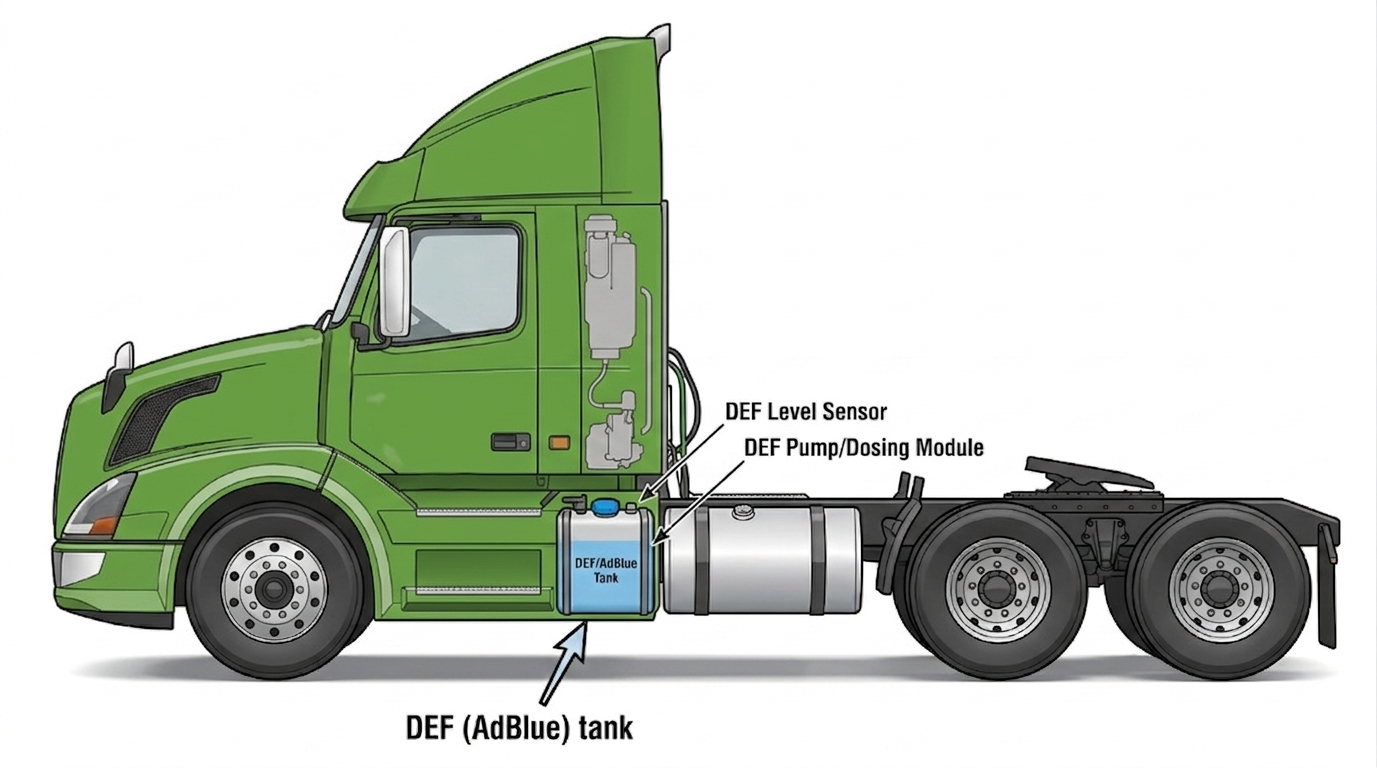
DEF is the diesel exhaust fluid system component that is part of the aftertreatment emission control system of the Volvo trucks and construction equipment. In Europe, DEF is known as Adblue. In order to meet EPA, Euro, and IMO environmental standards, the urea is injected into our exhaust and effectively minimizes NOx emissions. However, for many owners of Volvo equipment with D11, D13, and D16 engines—as well as VNL, FH, FM, L-series models and construction machinery—the SCR system often becomes a source of fault codes, downtime, and high operating costs.
In this article, we’ll explain what complete DEF (AdBlue) removal means, the benefits it can provide, the risks involved, and the critical points that must be considered when performing this procedure.
What Is DEF (AdBlue) and What Is It Used For?
DEF stands for Diesel Exhaust Fluid which is also a solution of 32.5 urea that is injected into the exhaust system before the SCR catalyst is placed. Under high temperatures, the urea breaks down into ammonia, which neutralizes nitrogen oxides (NOx). This system is mandatory for all Euro 5 and Euro 6 diesel engines.
On Volvo equipment, the DEF system includes:
AdBlue tank (10–100 liters depending on the model)
Dosing pump
Injection nozzle
Level, temperature, and quality sensors
NOx sensors before and after the SCR
DCU (Dosing Control Unit)
What Does Complete DEF (AdBlue) Removal on Volvo Mean?
Complete DEF (AdBlue) removal involves disabling and programmatically deactivating the entire SCR system, including:
DEF dosing pump
NOx sensors
Heaters and DEF supply lines
AdBlue level and quality monitoring
Urea injection nozzle
SCR monitoring within the EMS/ACM (Engine Management System / Aftertreatment Control Module)
The goal is to eliminate recurring fault codes (SPN 4364, 4094, 3364, 5394, etc.), remove the power limitations, and prevent sudden activation of derate mode.
Pros of Complete DEF (AdBlue) Removal on Volvo
1. Reduced Operating Costs
This removal eliminates continuous costs connected to:
Purchasing AdBlue
Replacing NOx sensors
ACM repairs
Replacing frozen or clogged DEF lines
For high-mileage equipment, the savings can be substantial.
2. Full Elimination of Power Derate Mode
Most SCR-related faults result in torque reduction and speed limits. After a properly executed software recalibration, the engine operates steadily in normal modes without the risk of sudden power loss.
3. Improved Reliability in Harsh Operating Conditions
In quarries, northern regions, and 24/7 duty cycles, the SCR system is often a weak point.
Removal solves issues related to AdBlue freezing and sensor failures caused by vibration and dust.
4. Fewer False Fault Codes
Volvo monitors DEF quality and sensor functioning system. Once SCR monitoring is disabled, related fault codes are eliminated.
Cons and Risks of DEF (AdBlue) Removal
1. Violation of Emissions Regulations
After SCR removal, the equipment may no longer comply with Euro 5/6 or EPA requirements. This can be critical when:
Passing commercial inspections
Operating in Europe or the United States
Working with large corporate partners
2. Potential Legal Restrictions
Before performing this procedure, it is essential to review local laws and regulations.
3. Requirement for Professional Calibration
If the intervention is done incorrectly:
Internal EMS/ACM errors may remain
Torque dips may occur
Fuel consumption may increase
Engine idle may become unstable
Cheap “universal” solutions often lead to repeat repairs.
How to Properly Perform Complete DEF (AdBlue) Removal on Volvo
Proper removal is not just about “cutting out the canister and installing a cheap emulator.”
Stages of AdBlue Removal on Modern Volvo Equipment
Physical Removal
Removal of the urea tank, pump, and injector
NOx sensors are removed or disabled (often left in place and electronically spoofed)
The SCR catalyst can be removed or hollowed out (the second option is quieter)
Software Deactivation
Engine control module (ECM) reflashed to Euro 2 or Euro 0 standards
ACM (Aftertreatment Control Module) disabled (for example, via the Mochester App / M4 App)
All related fault codes and power limits are disabled
Emulation (Alternative to Reflashing)
On some 2018–2022 models, installing a high-quality NOx emulator and disabling the pump can be simpler and cheaper.
However, about 90% of professionals now avoid emulators—software recalibration is more reliable.
Technical Nuances
System Inspection and Cleaning Before Deactivation
It is recommended to:
Inspect the injector
Ensure there are no active DEF leaks
Remove urea crystallization from the exhaust system
This helps prevent future issues.
Model-Specific Compatibility Considerations
Different Volvo series require different approaches:
Volvo VNL (D11/D13/D16 engines) — proper ACM handling is critical
Volvo FH/FM Euro 5/6 — special attention to EMS parameters
Volvo Construction Equipment (EC – excavators / L – wheel loaders / A-series – articulated haulers) — CAN (Controller Area Network) line rerouting may sometimes be required
How Do You Know It’s Time to Consider DEF (AdBlue) Removal?
Key warning signs include:
Persistent NOx-related fault codes
Reduced power and frequent derate mode
Repeated dosing pump failures
DEF crystallization in cold weather
Increasing AdBlue consumption
ACM malfunctions
If the issues persist after the sensors are swapped and system repairs are made, the system has most likely reached the end of its serviceable life.
Conclusion
Eliminating your DEF (AdBlue) system on your Volvo equipment will improve reliability, reduce operating costs, and remove power derate modes on your equipment. However, the procedure comes with legal and environmental limitations and must be performed exclusively by professionals.
When done correctly and with high-quality software solutions, this approach becomes an effective option for high-mileage equipment or machinery operating in harsh conditions.