Volvo Construction Equipment Fault Codes List: Overview of Common Errors and Their Meanings

One can undoubtedly agree to the great and reliable service Volvo Construction Equipment (Volvo CE) provides. Their equipment’s strength and dynamic and highly developed control systems does give a great impression. However, like any complex machinery, Volvo excavators, wheel loaders, and haulers can experience faults and malfunctions that are recorded by the Electronic Control Unit (ECU). Being familiar with fault codes is key to solving problems efficiently. This article will look at the most popular fault codes for Volvo Construction Equipment and explain how to read them properly.
What Are Volvo CE Fault Codes and How to Read Them?
Fault codes are generated by a control system as identifiers when it identifies a malfunction, these identifiers are numeric or alphanumeric in structure. These codes help operators and mechanics determine which system is affected — whether it’s the engine, transmission, hydraulics, or electronic sensors.
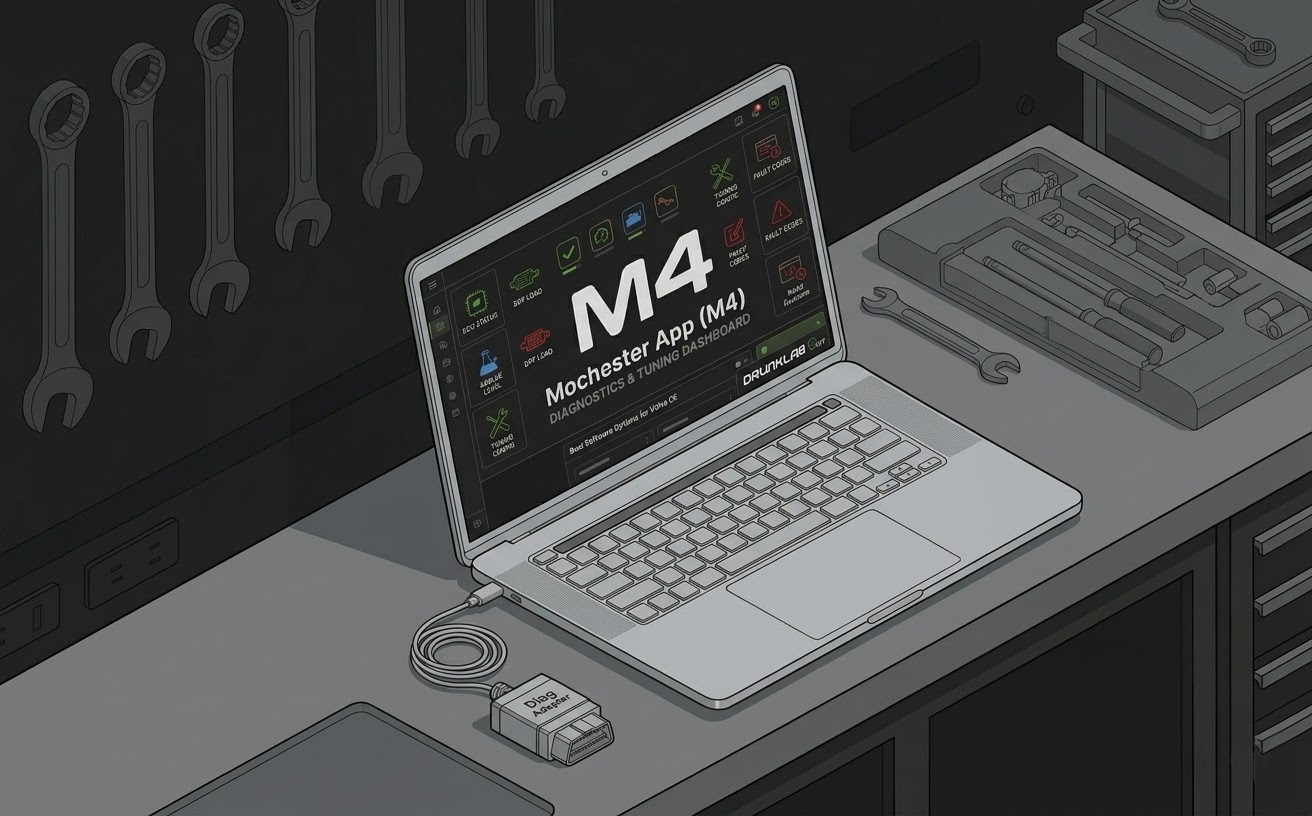
Volvo CE fault codes can be viewed on the onboard display or read using diagnostic software such as the Mochester App (M4 App).
If there’s no display on the machine that shows code descriptions, the codes can be accessed through the OBD port with a diagnostic adapter and a computer that has the necessary program.
Main Types of Volvo CE Fault Codes
Volvo CE fault codes are often based on the SAE (Society of Automotive Engineers) standard. Each code consists of several elements:
MID (Message ID) – Identifies the module where the fault was detected
PID/SID (Parameter/Subsystem ID) – Indicates the parameter or subsystem involved
FMI (Failure Mode Identifier) – Describes the type or cause of the failure
Example: MID 128 PID 91 FMI 3
MID 128 — Engine Control Module (ECU)
PID 91 — Fuel temperature sensor
FMI 3 — Signal above normal range
Volvo CE Fault Code List: Explanation and Troubleshooting
Below is a selection of common fault codes found in Volvo excavators, loaders, and articulated haulers.
This list isn't comprehensive--there are thousands--but it does include the most common and most frequently encountered problems.
DPF (Diesel Particulate Filter) Fault Codes — Soot and Regeneration
Code (SAE/Volvo) | Description | Possible Causes | Solution |
PPID 341 FMI 7 / EF2530-14 | DPF air pump failure (ACM) | Pump wear, broken wire | Inspect pump and wiring; perform forced regen via app (L120H) |
ECU 436 / PSID 15-1 | High soot load in DPF | Frequent idling, failed regen | Check pressure/temp sensors; replace DPF if soot >150% (EC210B) |
P2453 / PPID 1122 FMI 12 | Low pressure in DPF | Clogged filter, leak | Clean filter, inspect lines; perform regen test (A40G) |
128 PID 158 FMI 4 / ER45-04 | Low oil pressure affecting DPF | Broken circuit, weak battery | Inspect wiring; common on L90G |
SPN 4334 FMI 14 / EF2530-14 | Regeneration blocked (low pressure) | Low fuel or DEF | Forced regen via app; clean DPF (L150H) |
PPID 341 FMI 11 | DPF pump malfunction (mechanical) | Broken coil | Replace pump (~$500), recalibrate ECU |
P100400 | DPF efficiency below threshold | Contamination | Clean or replace DPF; monitor soot via app |
Example: In the EC240 model, fault code PSID 15-1 indicates soot buildup from short cycles. Solution: 30-minute regen at 1500 RPM.
SCR (Selective Catalytic Reduction) Fault Codes — DEF/AdBlue and NOx
Code (SAE/Volvo) | Description | Possible Causes | Solution |
P20EE00 / P204F9A | SCR NOx catalyst efficiency below threshold | Contaminated catalyst, poor DEF quality | Check NOx sensors (in/out); clean SCR (D13 in L120E) |
P204713 / SA16 DTC P204713 | SCR dosing valve open circuit | Broken harness, faulty doser | Check doser resistance (10–12Ω); replace harness (EC290) |
P103C00 / P100400 | Moderate SCR NOx efficiency drop | DEF leak or clog | Clean doser; perform NOx test via app (A40D) |
SA16 DTC U029D00 / U010E00 | Lost communication with NOx sensors/module | CAN corrosion, open circuit | Check ACM fuse (30A); replace sensors (~$300) |
P207F00 | Insufficient DEF dosing | Low/poor-quality DEF | Refill with fresh DEF; run dosing test (L70H) |
P208A86 / P218F92 | No DEF pressure | Clogged or leaking lines | Flush DEF tank/lines; inspect pump (L150H) |
P22FE00 / P229E13 | NOx sensor failure (short) | Damaged harness | Replace sensor; clear codes (EC210) |
Tip: For Volvo L70H, code P20EE00 is often caused by crystallized AdBlue. Cleaning and replacing the doser can save around $1000.
EGR (Exhaust Gas Recirculation) Fault Codes — Flow and Valve
Code (SAE/Volvo) | Description | Possible Causes | Solution |
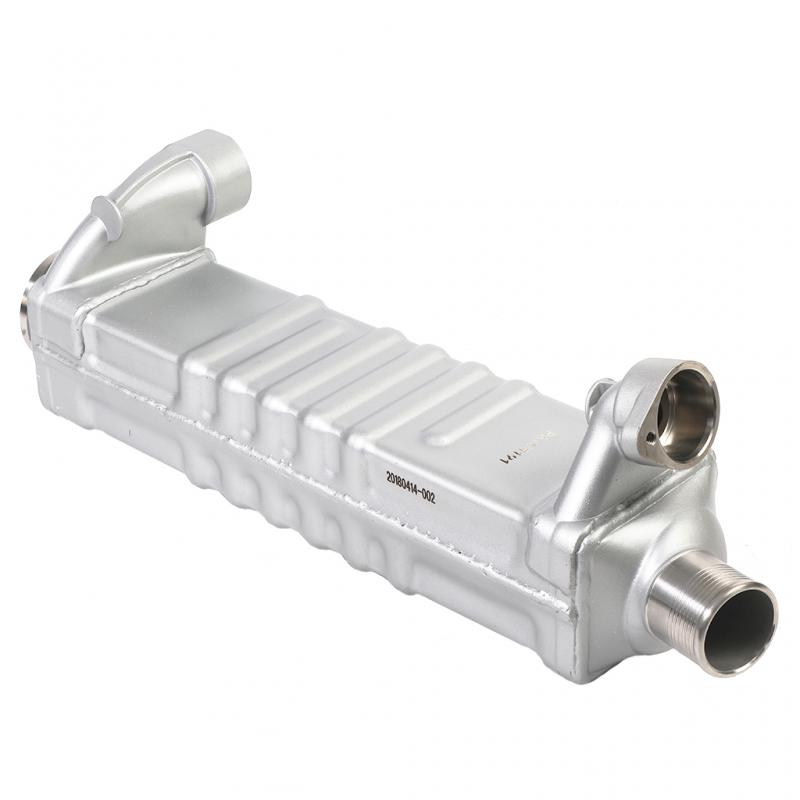
ECU 516 / P040100 | Insufficient EGR flow | Clogged valve or cooler | Clean EGR valve/cooler; calibrate via app (EC240) |
P04D900 | Closed-loop EGR: flow too low | Faulty position sensor | Check EGR position sensor; perform flow test (L120G) |
EECU SID 001 / PSID 96 FMI 1 | EGR valve intermittent fault | Wiring issue, contamination | Clean or replace valve; check L70G |
P0401 / SPN 3364 FMI 2 | Low EGR flow | Leak or stuck valve | Inspect tubing; perform forced EGR test via app |
128 SID 254 FMI 12 / ER12-12 | EGR ECU fault | Communication error | Reset ECM; check CAN bus (A40G) |
P205B64 | EGR sensor range/performance | Short circuit | Replace sensor; common on D13 (EC210B) |
Interesting: For L220E, code P04D900 usually means soot buildup in the cooler. Cleaning and EGR disable (for off-road use) solve 80% of cases.
Engine (ECM) Fault Codes
These codes often cause power loss, smoke, or no-start conditions.
Code (SAE/Volvo) | Description | Possible Causes | Solution |
PID 94 / EECU SID 001 | Low fuel pressure | Clogged filter, weak pump | Replace fuel filter/pump (25 ft-lbs on injectors) |
PPID 341 / FMI 7 | DPF air pump failure (ACM) | Mechanical wear, broken wire | Inspect pump/wiring; run regen via app |
SE2202-04 | Low oil temperature sensor voltage | Broken signal wire | Replace sensor or check voltage (0–5V) |
SE2703-03 | High camshaft sensor voltage | Short circuit | Check wiring; ECU reads 5V with ground loss |
HE2501-5 | Intake air heater open circuit | Broken coil | Replace coil (~$400), torque 25 ft-lbs |
Example: For Volvo EC240 with code SE2703-03, the engine might run but risk overheating — inspect for moisture or rodent damage.
Hydraulics and Transmission Fault Codes
Code (SAE/Volvo) | Description | Possible Causes | Solution |
ER31 | Power shift valve solenoid failure | Electrical fault in pump | Check valve on hydraulic pump; recalibrate via app |
MA5501-5 | Hydraulic oil sensor failure | Broken or shorted wire | Replace sensor; check oil level |
SE5212-4 | Low ABS sensor signal | Wheel issue | Inspect and clean wheel sensors |
ER13 | Hydraulic system sensor failure | Electrical issue or fuse | Check fuses/wiring; common in EC290 |
Tip: For Volvo EC210B, code ER13 often points to a blown fuse — a quick and inexpensive fix!
Electrical and Other System Fault Codes
Code (SAE/Volvo) | Description | Possible Causes | Solution |
128 SID254-12 | ECU controller failure | Faulty unit or connection | Reset ECU, check wiring |
E7 / FMI 14 | A/C coolant overheat | Leak or clog | Check refrigerant, clean condenser; avoid overfilling |
EF2530-14 | DPF regeneration blocked | Low pressure | Run forced regeneration via app |
MA9102-5 | Transmission fault | Solenoid failure | Inspect valve body (A40D) |
Interesting: On Volvo A40D, codes like MA4602-5 may “flash” due to vibration — tighten the bolts!
How to Fix Volvo CE Faults
Read the fault code — use a diagnostic tool or the Mochester App.
Check every ECM system — engine, hydraulics, ABS, and transmission, and then check for active and stored trouble codes.
Interpret the code — Use the chart or the diagnostic software to interpret the code.
FMI 3: High voltage
FMI 4: Low voltage
FMI 5: Open circuit
FMI 11: General fault
Visually inspect sensors, wiring, connectors, and filters for corrosion or damage.
Remove codes following servicing — use the app or dashboard to reset and check the machine.
Pro tip: Don’t ignore recurring codes. If a fault reappears, the issue isn't fixed or is systemic. In about 80% of cases, electrical issues (broken wires, weak batteries) are the main cause.
Benefits of Volvo CE Diagnostics
Quick fault localization
Reduced downtime
Improved service efficiency
Prevention of major breakdowns
Conclusion
Knowing the fault codes for Volvo Construction Equipment is important so that you can provide excellent maintenance. This is crucial for their long-term reliability. Regular diagnostics and the use of advanced tools like the Mochester App allow operators to detect and fix issues early, keeping Volvo machinery in perfect working condition.